Cloud PMS or On-Premise: What Suits Your Hotel?
Two operating models, one goal
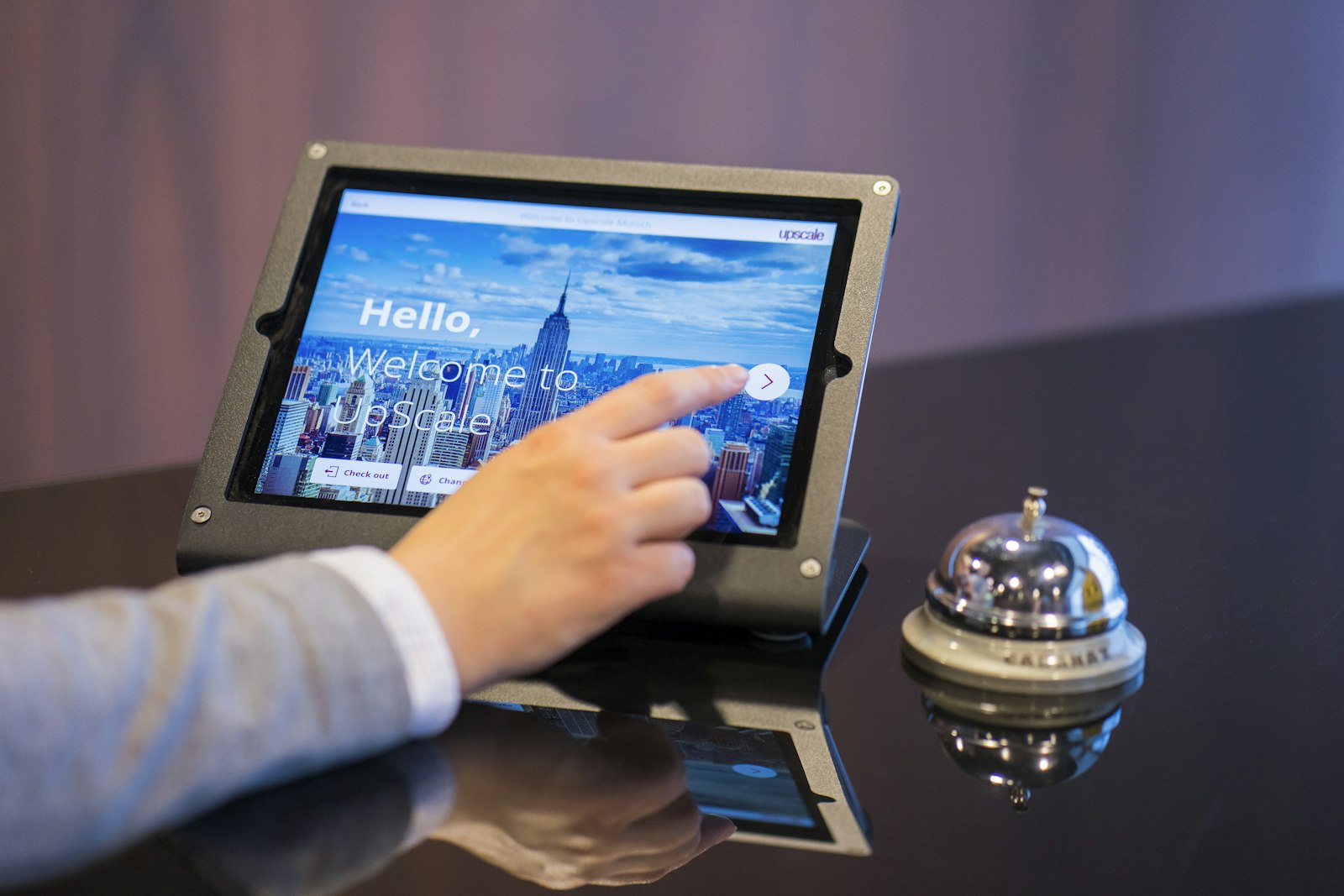
Whether you run a 12-room guesthouse or a 150-room hotel: in the end, the PMS has to do the same job — reliably manage reservations, room inventory and billing. But how that software actually runs at your property splits fundamentally into two models: cloud PMS and on-premise PMS. The choice has real consequences for cost, IT effort and flexibility.
What is a cloud PMS?
With a cloud PMS, the software runs on the provider's servers. You access it via browser or app, typically pay a monthly subscription, and don't have to worry about updates, backups or server maintenance yourself. The clear trend of recent years points firmly in this direction — for good reason: lower entry costs, automatic updates and access from anywhere.
What is an on-premise PMS?
An on-premise PMS runs on a server directly at your property. You typically buy the software as a licence, operate the hardware yourself or through a local IT provider, and are responsible for updates, backups and security yourself. This model was the standard for decades and is still found today mainly at larger properties with their own IT department or very specific requirements.
The direct comparison
| Criterion | Cloud PMS | On-premise PMS |
|---|---|---|
| Cost model | Monthly subscription, low entry cost | Licence purchase, higher upfront investment |
| Internet dependency | Yes — limited use without a stable connection | No — keeps running on-site even offline |
| Updates | Automatic, provided by the vendor | Manual, usually at extra cost |
| Access on the go | From any device with a browser | Usually only via VPN or on-site |
| Scalability across properties | Very high — central management possible | More effort, often siloed per location |
| Data protection / server location | Depends on the vendor — ask explicitly | Full control on your own premises |
Who cloud PMS suits
For most independent hotels and smaller properties, a cloud PMS is the obvious choice today: lower investment risk, no server hardware to own, and the system scales easily if a second property joins. For operations without an in-house IT team, vendor-managed maintenance is a genuine advantage — nobody on staff has to worry about security patches.
When on-premise still makes sense
On-premise remains relevant when existing IT infrastructure is already in place, very specific custom integrations are required, or the internet connection at the location is unreliable — for instance in a very remote area. Some larger hotel groups with their own IT department also deliberately choose more control on-site.
Don't forget data protection and server location
With a cloud PMS, your guest data sits on someone else's servers — which is fine in principle, as long as the server location and data processing agreement (Art. 28 GDPR) check out. Ask directly: where exactly is the data stored? Is there a DPA in place? Is data transferred outside the EU? Reputable vendors answer this without hesitation.
Conclusion
There is no universally "better" model — only the one that fits your operation. Most properties do well with a cloud PMS today, but the decision should be based on your specific situation: internet connectivity, IT resources, number of locations and data protection requirements.
Not sure which model fits your property? Our PMS comparison guide goes deeper into selection criteria and the vendor landscape, or you can reach out to us directly.